Readings Newsletter
Become a Readings Member to make your shopping experience even easier.
Sign in or sign up for free!
You’re not far away from qualifying for FREE standard shipping within Australia
You’ve qualified for FREE standard shipping within Australia
The cart is loading…


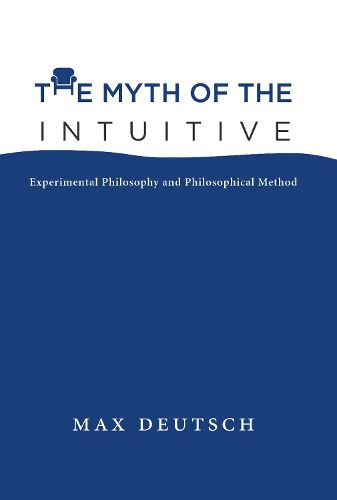
A defense of traditional philosophical method against challenges from practitioners of experimental philosophy. In The Myth of the Intuitive, Max Deutsch defends the methods of analytic philosophy against a recent empirical challenge mounted by the practitioners of experimental philosophy (xphi). This challenge concerns the extent to which analytic philosophy relies on intuition-in particular, the extent to which analytic philosophers treat intuitions as evidence in arguing for philosophical conclusions. Experimental philosophers say that analytic philosophers place a great deal of evidential weight on people’s intuitions about hypothetical cases and thought experiments. Deutsch argues forcefully that this view of traditional philosophical method is a myth, part of metaphilosophical folklore, and he supports his argument with close examinations of results from xphi and of a number of influential arguments in analytic philosophy.
Analytic philosophy makes regular use of hypothetical examples and thought experiments, but, Deutsch writes, philosophers argue for their claims about what is true or not true in these examples and thought experiments. It is these arguments, not intuitions, that are treated as evidence for the claims.
Deutsch discusses xphi and some recent xphi studies; critiques a variety of other metaphilosophical claims; examines such famous arguments as Gettier’s refutation of the JTB (justified true belief) theory and Kripke’s G del Case argument against descriptivism about proper names, and shows that they rely on reasoning rather than intuition; and finds existing critiques of xphi, the Multiple Concepts and Expertise replies, to be severely lacking.
$9.00 standard shipping within Australia
FREE standard shipping within Australia for orders over $100.00
Express & International shipping calculated at checkout
Stock availability can be subject to change without notice. We recommend calling the shop or contacting our online team to check availability of low stock items. Please see our Shopping Online page for more details.
A defense of traditional philosophical method against challenges from practitioners of experimental philosophy. In The Myth of the Intuitive, Max Deutsch defends the methods of analytic philosophy against a recent empirical challenge mounted by the practitioners of experimental philosophy (xphi). This challenge concerns the extent to which analytic philosophy relies on intuition-in particular, the extent to which analytic philosophers treat intuitions as evidence in arguing for philosophical conclusions. Experimental philosophers say that analytic philosophers place a great deal of evidential weight on people’s intuitions about hypothetical cases and thought experiments. Deutsch argues forcefully that this view of traditional philosophical method is a myth, part of metaphilosophical folklore, and he supports his argument with close examinations of results from xphi and of a number of influential arguments in analytic philosophy.
Analytic philosophy makes regular use of hypothetical examples and thought experiments, but, Deutsch writes, philosophers argue for their claims about what is true or not true in these examples and thought experiments. It is these arguments, not intuitions, that are treated as evidence for the claims.
Deutsch discusses xphi and some recent xphi studies; critiques a variety of other metaphilosophical claims; examines such famous arguments as Gettier’s refutation of the JTB (justified true belief) theory and Kripke’s G del Case argument against descriptivism about proper names, and shows that they rely on reasoning rather than intuition; and finds existing critiques of xphi, the Multiple Concepts and Expertise replies, to be severely lacking.
Search our extensive online catalogue.
