Readings Newsletter
Become a Readings Member to make your shopping experience even easier.
Sign in or sign up for free!
You’re not far away from qualifying for FREE standard shipping within Australia
You’ve qualified for FREE standard shipping within Australia
The cart is loading…


A fascinating view of how the world was perceived in the first century
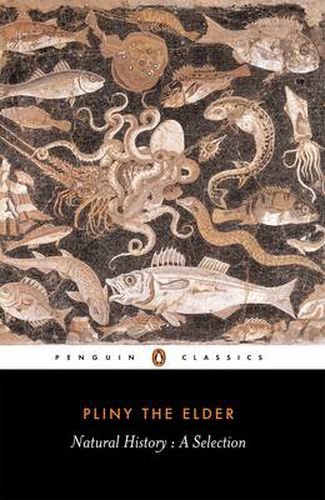
Pliny’s Natural History is an astonishingly ambitious work that ranges from astronomy to art and from geography to zoology. Mingling acute observation with often wild speculation, it offers a fascinating view of the world as it was understood in the first century AD, whether describing the danger of diving for sponges, the first water-clock, or the use of asses’ milk to remove wrinkles. Pliny himself died while investigating the volcanic eruption that destroyed Pompeii in AD 79, and the natural curiosity that brought about his death is also very much evident in the Natural History - a book that proved highly influential right up until the Renaissance and that his nephew, Pliny the younger, described ‘as full of variety as nature itself’.
$9.00 standard shipping within Australia
FREE standard shipping within Australia for orders over $100.00
Express & International shipping calculated at checkout
Stock availability can be subject to change without notice. We recommend calling the shop or contacting our online team to check availability of low stock items. Please see our Shopping Online page for more details.
A fascinating view of how the world was perceived in the first century
Pliny’s Natural History is an astonishingly ambitious work that ranges from astronomy to art and from geography to zoology. Mingling acute observation with often wild speculation, it offers a fascinating view of the world as it was understood in the first century AD, whether describing the danger of diving for sponges, the first water-clock, or the use of asses’ milk to remove wrinkles. Pliny himself died while investigating the volcanic eruption that destroyed Pompeii in AD 79, and the natural curiosity that brought about his death is also very much evident in the Natural History - a book that proved highly influential right up until the Renaissance and that his nephew, Pliny the younger, described ‘as full of variety as nature itself’.
Search our extensive online catalogue.
