Readings Newsletter
Become a Readings Member to make your shopping experience even easier.
Sign in or sign up for free!
You’re not far away from qualifying for FREE standard shipping within Australia
You’ve qualified for FREE standard shipping within Australia
The cart is loading…


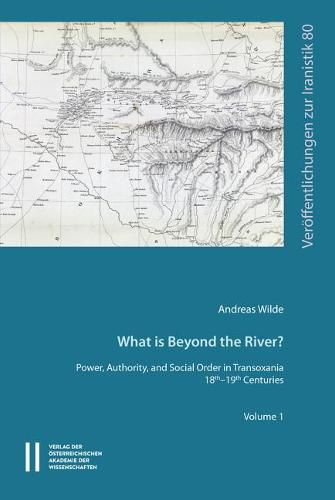
This book investigates the dialectics of power and social order in eighteenth and nineteenth-century Ma Wara’ al-Nahr from an intrinsic perspective. Relying on a rich corpus of Bukharan primary sources, the study is a work of fundamental research that combines established traditions of social historical research and approaches borrowed from the social sciences. The resulting narrative stretches from the Mongols and Abu'l-Khairids to the eighteenth century and the late Tuqay-Timurids, when the established spatial-administrative framework crumbled into an archipelago of petty Uzbek principalities, chiefdoms and city states, continuing with the Manghits and finishing in the late nineteenth century with the colonial penetration. While beginning with a conventional bird’s-eye view of steppe society worldviews and established patterns of authority, the author soon abandons the sole dynastic focus and comes up with a range of local histories. The reader will be acquainted with places like Nur, Shahr-i Sabz, Tirmidh, Hisar and other areas, which, having been dominated by competing military, religious and economic networks, remained partly outside the sphere of Tuqay-Timurid and later on Manghit authority. A large part of the book addresses the language employed in the chronicles by highlighting the semantics of key terms such as favor, loyalty or obedience. Those concepts are manifest in practices like patronage, mediation and gift exchange. Based on the materials of the Koshbegi Archive, the final part culminates in a range of micro-level studies of various socio-political domains in faraway villages and canal systems. Inspired by relational ideas of power, the analysis enhances our understanding of the factors that were decisive for social interaction in that period. Moreover, it gives fresh impulses to the debate on concepts of power and authority among historians and social scientists.
$9.00 standard shipping within Australia
FREE standard shipping within Australia for orders over $100.00
Express & International shipping calculated at checkout
Stock availability can be subject to change without notice. We recommend calling the shop or contacting our online team to check availability of low stock items. Please see our Shopping Online page for more details.
This book investigates the dialectics of power and social order in eighteenth and nineteenth-century Ma Wara’ al-Nahr from an intrinsic perspective. Relying on a rich corpus of Bukharan primary sources, the study is a work of fundamental research that combines established traditions of social historical research and approaches borrowed from the social sciences. The resulting narrative stretches from the Mongols and Abu'l-Khairids to the eighteenth century and the late Tuqay-Timurids, when the established spatial-administrative framework crumbled into an archipelago of petty Uzbek principalities, chiefdoms and city states, continuing with the Manghits and finishing in the late nineteenth century with the colonial penetration. While beginning with a conventional bird’s-eye view of steppe society worldviews and established patterns of authority, the author soon abandons the sole dynastic focus and comes up with a range of local histories. The reader will be acquainted with places like Nur, Shahr-i Sabz, Tirmidh, Hisar and other areas, which, having been dominated by competing military, religious and economic networks, remained partly outside the sphere of Tuqay-Timurid and later on Manghit authority. A large part of the book addresses the language employed in the chronicles by highlighting the semantics of key terms such as favor, loyalty or obedience. Those concepts are manifest in practices like patronage, mediation and gift exchange. Based on the materials of the Koshbegi Archive, the final part culminates in a range of micro-level studies of various socio-political domains in faraway villages and canal systems. Inspired by relational ideas of power, the analysis enhances our understanding of the factors that were decisive for social interaction in that period. Moreover, it gives fresh impulses to the debate on concepts of power and authority among historians and social scientists.
Search our extensive online catalogue.
