Readings Newsletter
Become a Readings Member to make your shopping experience even easier.
Sign in or sign up for free!
You’re not far away from qualifying for FREE standard shipping within Australia
You’ve qualified for FREE standard shipping within Australia
The cart is loading…


This title is printed to order. This book may have been self-published. If so, we cannot guarantee the quality of the content. In the main most books will have gone through the editing process however some may not. We therefore suggest that you be aware of this before ordering this book. If in doubt check either the author or publisher’s details as we are unable to accept any returns unless they are faulty. Please contact us if you have any questions.
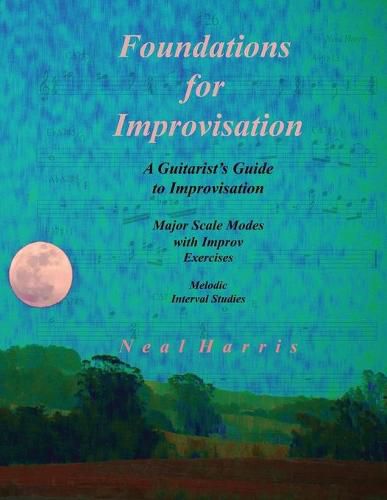
This book is written for the guitarist who is looking for an organized guide to the study of the materials and tools needed for the art of improvisation. The materials are the scales, intervals, chords, and arpeggios used in composition and improvisation.
This is book I–and with its help, you can explore improvising–starting with major scales and the major scale modes. This is supported by a section on major scale theory (chapters 1 through 4 ) in case there is a need to brush up on that.
Chapter 5: is about melodic interval studies to introduce some serious ways to look at melodically breaking up the scales.
Chapter 6: The major scale fingerings in 5 positions on the guitar.
Chapter 7: A thorough workout to learn the major scales in all keys in one position on the guitar. (This section is gone over in every position on the guitar in the appendices.)
Next is chapter 8: the major scale modes explained from multiple perspectives, including modal formulas with an improviser’s/composer’s viewpoint in mind.
This leads to chapter 9: the modal improvising section with examples of chords that coexist with each mode for you to hear and improvise with, exploring the relationship between them.
Finally, there is a section with examples of some common modulations with related modes for practicing your new skills …
Appendix 1 through 4 are the 12 major scales in 1 position exercise in positions 2 through 5.
$9.00 standard shipping within Australia
FREE standard shipping within Australia for orders over $100.00
Express & International shipping calculated at checkout
Stock availability can be subject to change without notice. We recommend calling the shop or contacting our online team to check availability of low stock items. Please see our Shopping Online page for more details.
This title is printed to order. This book may have been self-published. If so, we cannot guarantee the quality of the content. In the main most books will have gone through the editing process however some may not. We therefore suggest that you be aware of this before ordering this book. If in doubt check either the author or publisher’s details as we are unable to accept any returns unless they are faulty. Please contact us if you have any questions.
This book is written for the guitarist who is looking for an organized guide to the study of the materials and tools needed for the art of improvisation. The materials are the scales, intervals, chords, and arpeggios used in composition and improvisation.
This is book I–and with its help, you can explore improvising–starting with major scales and the major scale modes. This is supported by a section on major scale theory (chapters 1 through 4 ) in case there is a need to brush up on that.
Chapter 5: is about melodic interval studies to introduce some serious ways to look at melodically breaking up the scales.
Chapter 6: The major scale fingerings in 5 positions on the guitar.
Chapter 7: A thorough workout to learn the major scales in all keys in one position on the guitar. (This section is gone over in every position on the guitar in the appendices.)
Next is chapter 8: the major scale modes explained from multiple perspectives, including modal formulas with an improviser’s/composer’s viewpoint in mind.
This leads to chapter 9: the modal improvising section with examples of chords that coexist with each mode for you to hear and improvise with, exploring the relationship between them.
Finally, there is a section with examples of some common modulations with related modes for practicing your new skills …
Appendix 1 through 4 are the 12 major scales in 1 position exercise in positions 2 through 5.
Search our extensive online catalogue.
