Readings Newsletter
Become a Readings Member to make your shopping experience even easier.
Sign in or sign up for free!
You’re not far away from qualifying for FREE standard shipping within Australia
You’ve qualified for FREE standard shipping within Australia
The cart is loading…


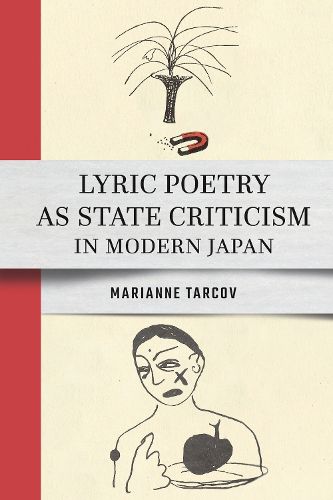
Lyric Poetry as State Criticism in Modern Japan explores how seemingly apolitical verse became a subtle vehicle for political expression under censorship. In an era of intense state control, Japanese poets such as Kitahara Hakushu, Hagiwara Sakutaro, Yonezawa Nobuko, and Ote Takuji turned to lyric poetry to discuss police censorship and surveillance of modern media, state-sponsored efforts at Western-style modernization, and the policing of gender and sexuality. Marianne Tarcov shows how lyric form, widely perceived as personal and harmless, enabled poets to veil their critique in plain sight.
Through close readings and original translations, Tarcov reframes the role of poetry in twentieth-century Japan. She demonstrates that lyric was not merely an aesthetic retreat; it was a space where public and private, art and politics, could intersect and sometimes clash. Lyric Poetry as State Criticism in Modern Japan reshapes how we understand voice, complicity and critique in repressive regimes. It will speak to anyone interested in literature, media, and the power of quiet dissent.
$9.00 standard shipping within Australia
FREE standard shipping within Australia for orders over $100.00
Express & International shipping calculated at checkout
Stock availability can be subject to change without notice. We recommend calling the shop or contacting our online team to check availability of low stock items. Please see our Shopping Online page for more details.
Lyric Poetry as State Criticism in Modern Japan explores how seemingly apolitical verse became a subtle vehicle for political expression under censorship. In an era of intense state control, Japanese poets such as Kitahara Hakushu, Hagiwara Sakutaro, Yonezawa Nobuko, and Ote Takuji turned to lyric poetry to discuss police censorship and surveillance of modern media, state-sponsored efforts at Western-style modernization, and the policing of gender and sexuality. Marianne Tarcov shows how lyric form, widely perceived as personal and harmless, enabled poets to veil their critique in plain sight.
Through close readings and original translations, Tarcov reframes the role of poetry in twentieth-century Japan. She demonstrates that lyric was not merely an aesthetic retreat; it was a space where public and private, art and politics, could intersect and sometimes clash. Lyric Poetry as State Criticism in Modern Japan reshapes how we understand voice, complicity and critique in repressive regimes. It will speak to anyone interested in literature, media, and the power of quiet dissent.
Search our extensive online catalogue.
