Readings Newsletter
Become a Readings Member to make your shopping experience even easier.
Sign in or sign up for free!
You’re not far away from qualifying for FREE standard shipping within Australia
You’ve qualified for FREE standard shipping within Australia
The cart is loading…


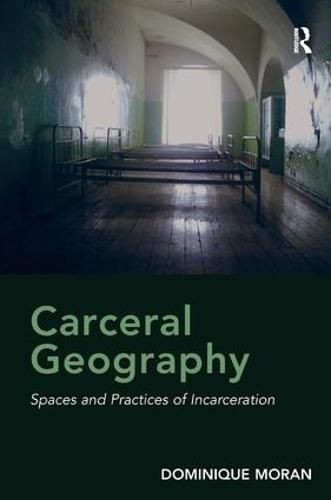
The ‘punitive turn’ has brought about new ways of thinking about geography and the state, and has highlighted spaces of incarceration as a new terrain for exploration by geographers. Carceral geography offers a geographical perspective on incarceration, and this volume accordingly tracks the ideas, practices and engagements that have shaped the development of this new and vibrant subdiscipline, and scopes out future research directions. By conveying a sense of the debates, directions, and threads within the field of carceral geography, it traces the inner workings of this dynamic field, its synergies with criminology and prison sociology, and its likely future trajectories. Synthesizing existing work in carceral geography, and exploring the future directions it might take, the book develops a notion of the ‘carceral’ as spatial, emplaced, mobile, embodied and affective.
$9.00 standard shipping within Australia
FREE standard shipping within Australia for orders over $100.00
Express & International shipping calculated at checkout
Stock availability can be subject to change without notice. We recommend calling the shop or contacting our online team to check availability of low stock items. Please see our Shopping Online page for more details.
The ‘punitive turn’ has brought about new ways of thinking about geography and the state, and has highlighted spaces of incarceration as a new terrain for exploration by geographers. Carceral geography offers a geographical perspective on incarceration, and this volume accordingly tracks the ideas, practices and engagements that have shaped the development of this new and vibrant subdiscipline, and scopes out future research directions. By conveying a sense of the debates, directions, and threads within the field of carceral geography, it traces the inner workings of this dynamic field, its synergies with criminology and prison sociology, and its likely future trajectories. Synthesizing existing work in carceral geography, and exploring the future directions it might take, the book develops a notion of the ‘carceral’ as spatial, emplaced, mobile, embodied and affective.
Search our extensive online catalogue.
