Readings Newsletter
Become a Readings Member to make your shopping experience even easier.
Sign in or sign up for free!
You’re not far away from qualifying for FREE standard shipping within Australia
You’ve qualified for FREE standard shipping within Australia
The cart is loading…


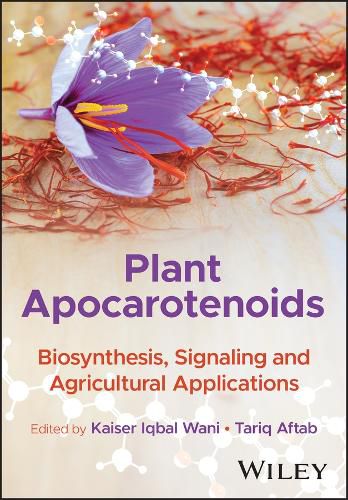
Presents a comprehensive guide to plant apocarotenoids-from biosynthetic pathways to agricultural innovation and sustainability
Apocarotenoids are emerging as central players in plant biology, offering profound insights into growth regulation, stress responses, and developmental processes. Derived from carotenoids through oxidative cleavage, these compounds serve as key signaling molecules with far-reaching implications for plant physiology and crop improvement. Recent advancements in molecular biology, genetic engineering, and synthetic biology have accelerated research in this domain, making apocarotenoids a critical area of study for plant scientists, agricultural biotechnologists, and crop physiologists. Yet, despite their importance, comprehensive resources that integrate biosynthesis, signaling, and applied agricultural aspects have remained limited.
Plant Apocarotenoids: Biosynthesis, Signaling and Agricultural Applications provides an in-depth exploration of both fundamental and translational aspects of these bioactive molecules. Organized into five sections, the volume begins with the fundamentals of apocarotenoid biosynthesis and signaling mechanisms before delving into specific compounds such as strigolactones, zaxinone, ?-cyclocitral, and ?-ionone. Special emphasis is placed on saffron apocarotenoids, reflecting their unique biochemical pathways and relevance to biotechnology. Later sections examine apocarotenoids in plant defense, symbiotic interactions, and stress adaptation, while concluding chapters address their engineering for agricultural applications such as crop resilience, biofortification, and global food security.
An authoritative resource that bridges basic science and applied outcomes, Plant Apocarotenoids: Biosynthesis, Signaling and Agricultural Applications:
Features contributions from an interdisciplinary team of experts, integrating fundamental and applied research perspectives Provides a complete overview of apocarotenoid structural diversity, biosynthesis, and regulation Highlights the role of apocarotenoids in plant signaling, growth, and development Includes a dedicated section on saffron apocarotenoids and their biotechnological potential Details metabolic engineering strategies to enhance apocarotenoid pathways in crops
Equipping readers with the knowledge necessary to drive future innovations in sustainable agriculture.
Plant Apocarotenoids: Biosynthesis, Signaling and Agricultural Applications is an essential reference for graduate students, researchers, and professionals in plant science, biochemistry, crop physiology, genetics, and agricultural biotechnology. It is particularly suited for advanced courses in Plant Biochemistry, Plant Biotechnology, and Crop Improvement within MSc and PhD programs in agricultural and biological sciences.
$9.00 standard shipping within Australia
FREE standard shipping within Australia for orders over $100.00
Express & International shipping calculated at checkout
Stock availability can be subject to change without notice. We recommend calling the shop or contacting our online team to check availability of low stock items. Please see our Shopping Online page for more details.
Presents a comprehensive guide to plant apocarotenoids-from biosynthetic pathways to agricultural innovation and sustainability
Apocarotenoids are emerging as central players in plant biology, offering profound insights into growth regulation, stress responses, and developmental processes. Derived from carotenoids through oxidative cleavage, these compounds serve as key signaling molecules with far-reaching implications for plant physiology and crop improvement. Recent advancements in molecular biology, genetic engineering, and synthetic biology have accelerated research in this domain, making apocarotenoids a critical area of study for plant scientists, agricultural biotechnologists, and crop physiologists. Yet, despite their importance, comprehensive resources that integrate biosynthesis, signaling, and applied agricultural aspects have remained limited.
Plant Apocarotenoids: Biosynthesis, Signaling and Agricultural Applications provides an in-depth exploration of both fundamental and translational aspects of these bioactive molecules. Organized into five sections, the volume begins with the fundamentals of apocarotenoid biosynthesis and signaling mechanisms before delving into specific compounds such as strigolactones, zaxinone, ?-cyclocitral, and ?-ionone. Special emphasis is placed on saffron apocarotenoids, reflecting their unique biochemical pathways and relevance to biotechnology. Later sections examine apocarotenoids in plant defense, symbiotic interactions, and stress adaptation, while concluding chapters address their engineering for agricultural applications such as crop resilience, biofortification, and global food security.
An authoritative resource that bridges basic science and applied outcomes, Plant Apocarotenoids: Biosynthesis, Signaling and Agricultural Applications:
Features contributions from an interdisciplinary team of experts, integrating fundamental and applied research perspectives Provides a complete overview of apocarotenoid structural diversity, biosynthesis, and regulation Highlights the role of apocarotenoids in plant signaling, growth, and development Includes a dedicated section on saffron apocarotenoids and their biotechnological potential Details metabolic engineering strategies to enhance apocarotenoid pathways in crops
Equipping readers with the knowledge necessary to drive future innovations in sustainable agriculture.
Plant Apocarotenoids: Biosynthesis, Signaling and Agricultural Applications is an essential reference for graduate students, researchers, and professionals in plant science, biochemistry, crop physiology, genetics, and agricultural biotechnology. It is particularly suited for advanced courses in Plant Biochemistry, Plant Biotechnology, and Crop Improvement within MSc and PhD programs in agricultural and biological sciences.
Search our extensive online catalogue.
