Readings Newsletter
Become a Readings Member to make your shopping experience even easier.
Sign in or sign up for free!
You’re not far away from qualifying for FREE standard shipping within Australia
You’ve qualified for FREE standard shipping within Australia
The cart is loading…


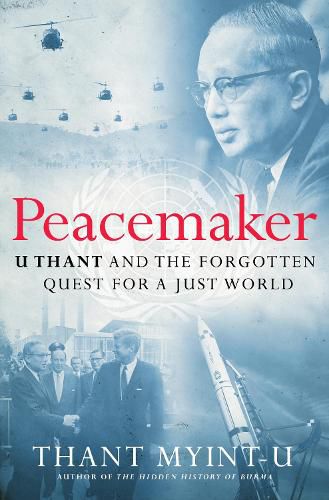
In the early 1960s, a peaceful world was an imaginable goal. The still-young United Nations was widely respected and regarded as humankind's best hope for resolving global conflicts. African and Asian nations, having recently won their freedom from colonial domination, sought dignity and influence on the world stage. At the helm of their international efforts was U Thant, a practicing Buddhist from a remote town in Burma who, as the UN's first non-Western secretary-general, became the Cold War era's preeminent ambassador of peace.
From the moment of his predecessor's mysterious death in 1961, Thant faced a deluge of violent conflicts in Congo, Yemen, Cyprus, and Nigeria, as well as one between India and Pakistan, that threatened larger conflagrations.
Crucially, during the Cuban Missile Crisis, he played an indispensable role-virtually hidden until now-in defusing tensions and helping both superpowers find a way back from nuclear confrontation. For years Thant also challenged Washington over its war in Vietnam, identifying paths to peace that could have saved the lives of millions.
Drawing on newly declassified documents, Thant's grandson, historian Thant Myint-U, gives a riveting account of how his grandfather's gentle yet willful disposition shaped his determination to avoid a third world war, give voice to the newly decolonized world, create a fairer international economy, and safeguard the environment. Rather than a vestige of an idealistic past, U Thant's fight for peace is central to a fresh understanding of our world today.
$9.00 standard shipping within Australia
FREE standard shipping within Australia for orders over $100.00
Express & International shipping calculated at checkout
Stock availability can be subject to change without notice. We recommend calling the shop or contacting our online team to check availability of low stock items. Please see our Shopping Online page for more details.
In the early 1960s, a peaceful world was an imaginable goal. The still-young United Nations was widely respected and regarded as humankind's best hope for resolving global conflicts. African and Asian nations, having recently won their freedom from colonial domination, sought dignity and influence on the world stage. At the helm of their international efforts was U Thant, a practicing Buddhist from a remote town in Burma who, as the UN's first non-Western secretary-general, became the Cold War era's preeminent ambassador of peace.
From the moment of his predecessor's mysterious death in 1961, Thant faced a deluge of violent conflicts in Congo, Yemen, Cyprus, and Nigeria, as well as one between India and Pakistan, that threatened larger conflagrations.
Crucially, during the Cuban Missile Crisis, he played an indispensable role-virtually hidden until now-in defusing tensions and helping both superpowers find a way back from nuclear confrontation. For years Thant also challenged Washington over its war in Vietnam, identifying paths to peace that could have saved the lives of millions.
Drawing on newly declassified documents, Thant's grandson, historian Thant Myint-U, gives a riveting account of how his grandfather's gentle yet willful disposition shaped his determination to avoid a third world war, give voice to the newly decolonized world, create a fairer international economy, and safeguard the environment. Rather than a vestige of an idealistic past, U Thant's fight for peace is central to a fresh understanding of our world today.
Search our extensive online catalogue.
