Readings Newsletter
Become a Readings Member to make your shopping experience even easier.
Sign in or sign up for free!
You’re not far away from qualifying for FREE standard shipping within Australia
You’ve qualified for FREE standard shipping within Australia
The cart is loading…


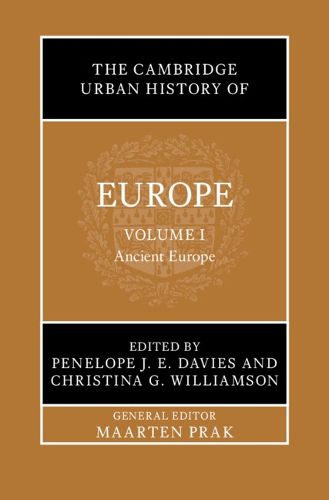
Volume I offers a broad perspective on urban culture in the ancient European world. It begins with chronological overviews which paint in broad brushstrokes a picture that serves as a frame for the thematic chapters in the rest of the volume. Positioning ancient Europe within its wider context, it touches on Asia and Africa as regions that informed and were later influenced by urban development in Europe, with particular emphasis on the Mediterranean basin. Topics range from formal characteristics (including public space), water provision, waste disposal, urban maintenance, spaces for the dead, and border spaces; to ways of thinking about, visualising, and remembering cities in antiquity; to conflict within and between cities, economics, mobility and globalisation, intersectional urban experiences, slavery, political participation, and religion.
$9.00 standard shipping within Australia
FREE standard shipping within Australia for orders over $100.00
Express & International shipping calculated at checkout
Stock availability can be subject to change without notice. We recommend calling the shop or contacting our online team to check availability of low stock items. Please see our Shopping Online page for more details.
Volume I offers a broad perspective on urban culture in the ancient European world. It begins with chronological overviews which paint in broad brushstrokes a picture that serves as a frame for the thematic chapters in the rest of the volume. Positioning ancient Europe within its wider context, it touches on Asia and Africa as regions that informed and were later influenced by urban development in Europe, with particular emphasis on the Mediterranean basin. Topics range from formal characteristics (including public space), water provision, waste disposal, urban maintenance, spaces for the dead, and border spaces; to ways of thinking about, visualising, and remembering cities in antiquity; to conflict within and between cities, economics, mobility and globalisation, intersectional urban experiences, slavery, political participation, and religion.
Search our extensive online catalogue.
