Readings Newsletter
Become a Readings Member to make your shopping experience even easier.
Sign in or sign up for free!
You’re not far away from qualifying for FREE standard shipping within Australia
You’ve qualified for FREE standard shipping within Australia
The cart is loading…


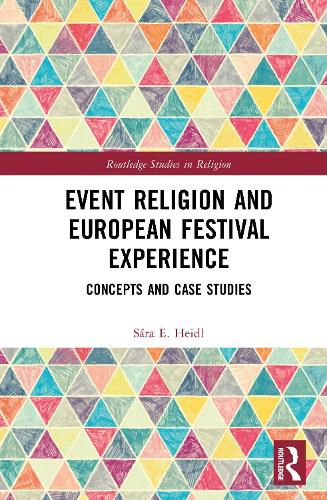
This book contributes to empirical research on festivals and presents a model of "event religion" for interpreting festival experiences from a religious studies perspective. It features a comparison of three Hungarian case studies with different backgrounds - a mindfulness festival, a Catholic event, and a rock-metal music festival. The author suggests that examining event experiences along the four dimensions of spatiotemporality, symbols, community, and inward experience provides a conceptual framework for understanding contemporary alternative religious beliefs, behaviours, and experiences. She also utilises "religionesque" as an umbrella term for the various concepts that describe religion-related experiences and approaches. The book will be of interest to scholars of religion, sociology, anthropology, and others with a focus on events and festivals.
$9.00 standard shipping within Australia
FREE standard shipping within Australia for orders over $100.00
Express & International shipping calculated at checkout
Stock availability can be subject to change without notice. We recommend calling the shop or contacting our online team to check availability of low stock items. Please see our Shopping Online page for more details.
This book contributes to empirical research on festivals and presents a model of "event religion" for interpreting festival experiences from a religious studies perspective. It features a comparison of three Hungarian case studies with different backgrounds - a mindfulness festival, a Catholic event, and a rock-metal music festival. The author suggests that examining event experiences along the four dimensions of spatiotemporality, symbols, community, and inward experience provides a conceptual framework for understanding contemporary alternative religious beliefs, behaviours, and experiences. She also utilises "religionesque" as an umbrella term for the various concepts that describe religion-related experiences and approaches. The book will be of interest to scholars of religion, sociology, anthropology, and others with a focus on events and festivals.
Search our extensive online catalogue.
