Readings Newsletter
Become a Readings Member to make your shopping experience even easier.
Sign in or sign up for free!
You’re not far away from qualifying for FREE standard shipping within Australia
You’ve qualified for FREE standard shipping within Australia
The cart is loading…


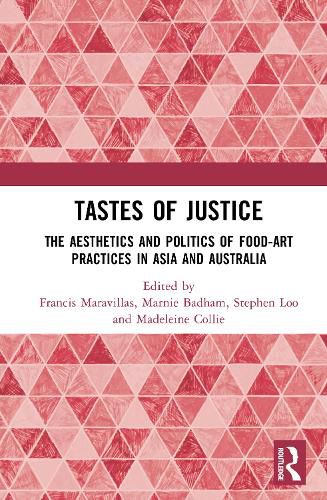
Tastes of Justice reveals the diversity of creative and cultural practices in contemporary food art and performances in and between Asia and Australia. It examines the ways in which these engender new frameworks for the sensuous, affective, social, and material dimensions of the alimentary in creative practice.
It interleaves scholarly chapters by artists, curators, theorists, and historians with artists' perspectives in the form of visual essays, recipes, and case studies. In doing so, it offers conceptual framings in art and curatorial practice and critical understandings of lived experience, challenging the normative epistemologies that typically operate between aesthetics and politics in food art and performance.
The book critically engages with themes including enculturation, diaspora, museology, sustainability, activism, and socially engaged art; it reworks notions of collaboration, correspondence, and commensality in human and more-than-human relations. Tastes of Justice offers its readers unique techniques to attend to invisibilities, inequalities, relationalities, and justice, where the politics of food art is inseparable from its aesthetics - from the way it tastes.
$9.00 standard shipping within Australia
FREE standard shipping within Australia for orders over $100.00
Express & International shipping calculated at checkout
Stock availability can be subject to change without notice. We recommend calling the shop or contacting our online team to check availability of low stock items. Please see our Shopping Online page for more details.
Tastes of Justice reveals the diversity of creative and cultural practices in contemporary food art and performances in and between Asia and Australia. It examines the ways in which these engender new frameworks for the sensuous, affective, social, and material dimensions of the alimentary in creative practice.
It interleaves scholarly chapters by artists, curators, theorists, and historians with artists' perspectives in the form of visual essays, recipes, and case studies. In doing so, it offers conceptual framings in art and curatorial practice and critical understandings of lived experience, challenging the normative epistemologies that typically operate between aesthetics and politics in food art and performance.
The book critically engages with themes including enculturation, diaspora, museology, sustainability, activism, and socially engaged art; it reworks notions of collaboration, correspondence, and commensality in human and more-than-human relations. Tastes of Justice offers its readers unique techniques to attend to invisibilities, inequalities, relationalities, and justice, where the politics of food art is inseparable from its aesthetics - from the way it tastes.
Search our extensive online catalogue.
