Readings Newsletter
Become a Readings Member to make your shopping experience even easier.
Sign in or sign up for free!
You’re not far away from qualifying for FREE standard shipping within Australia
You’ve qualified for FREE standard shipping within Australia
The cart is loading…


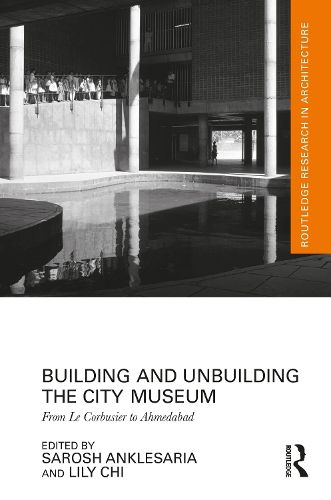
Sanskar Kendra stands as one of Le Corbusier's lesser-known architectural achievements, a cultural center designed for post-independence Ahmedabad that now faces an uncertain future. This book examines Sanskar Kendra both as a physical artifact and as a site of broader cultural debates.
Originally conceived as a Citizens' Cultural Center to serve India's emerging modern society, the building was intentionally designed as an alternative to colonial and European museum models. Today, however, the abandoned structure seems increasingly disconnected from the rapidly changing city growing around it. Through detailed analysis of the project's ambitious beginnings and the debates surrounding its potential demolition, the collection explores themes ranging from concrete construction techniques to questions about who gets included-and excluded-from public cultural spaces. The essays bring together local and international perspectives on pressing contemporary issues: how we care for and maintain our built environments, what it means to create truly participatory public spaces in an age of market-driven development, and how design can serve as a tool for social change. Two of the chapters take a visual approach to these questions. Award-winning architectural photographer Randhir Singh contributes a photo essay that captures the building's current state, while another chapter presents speculative architectural designs that imagine alternative futures for Sanskar Kendra. The book concludes with renowned architect B.V. Doshi's reflections on the architect's responsibility to society.
This book will appeal to scholars, educators, and students working in architectural theory, history, and design education. It's also valuable for readers interested in visual culture, urban studies, museum and curatorial studies, and South Asian studies.
$9.00 standard shipping within Australia
FREE standard shipping within Australia for orders over $100.00
Express & International shipping calculated at checkout
Stock availability can be subject to change without notice. We recommend calling the shop or contacting our online team to check availability of low stock items. Please see our Shopping Online page for more details.
Sanskar Kendra stands as one of Le Corbusier's lesser-known architectural achievements, a cultural center designed for post-independence Ahmedabad that now faces an uncertain future. This book examines Sanskar Kendra both as a physical artifact and as a site of broader cultural debates.
Originally conceived as a Citizens' Cultural Center to serve India's emerging modern society, the building was intentionally designed as an alternative to colonial and European museum models. Today, however, the abandoned structure seems increasingly disconnected from the rapidly changing city growing around it. Through detailed analysis of the project's ambitious beginnings and the debates surrounding its potential demolition, the collection explores themes ranging from concrete construction techniques to questions about who gets included-and excluded-from public cultural spaces. The essays bring together local and international perspectives on pressing contemporary issues: how we care for and maintain our built environments, what it means to create truly participatory public spaces in an age of market-driven development, and how design can serve as a tool for social change. Two of the chapters take a visual approach to these questions. Award-winning architectural photographer Randhir Singh contributes a photo essay that captures the building's current state, while another chapter presents speculative architectural designs that imagine alternative futures for Sanskar Kendra. The book concludes with renowned architect B.V. Doshi's reflections on the architect's responsibility to society.
This book will appeal to scholars, educators, and students working in architectural theory, history, and design education. It's also valuable for readers interested in visual culture, urban studies, museum and curatorial studies, and South Asian studies.
Search our extensive online catalogue.
