Readings Newsletter
Become a Readings Member to make your shopping experience even easier.
Sign in or sign up for free!
You’re not far away from qualifying for FREE standard shipping within Australia
You’ve qualified for FREE standard shipping within Australia
The cart is loading…


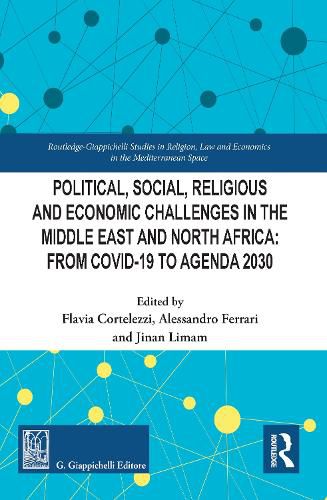
A decade after the "Arab springs", the book aims to provide a concise perspective on the political, social and economic challenges of the southern shore of the Mediterranean a decade after the "Arab springs". The volume, both from a sociolegal and economic perspective, aims to offer readers an analytical and up-todate picture of the transformations in several particularly significant countries in the area under consideration. The volume thus covers the entire north African and near Eastern coastal belt, from Morocco to Lebanon, and extends its focus into the Gulf. In particular, keeping in the background the Agenda 2020-2030, the book explores, on the one side, the role of the religious factor in the transformation of the constitutional orders and, on the other, the perspectives of economies of MENA region in the decade that followed the "Arab springs". In a different way, the Arab springs were characterized, from a constitutional point of view, by the attempt at a different relationship between political power and religion. This new arrangement, particularly evident in the Tunisian Constitution, but not absent in other contemporary experiences, was associated with favorable and expanding economic prospects. The book questions the relevance of this reading and how economic and political factors affected subsequent transformations. The situation of each country is individual in that it differs depending on many factors, starting with historical and geographical factors that have profoundly influenced social, political and economic structures. What is to be expected for the MENA region in the light of Agenda 2020-2030? Which are the major opportunities for growth and reform and which are the main risks? By adopting a multidisciplinary approach this book will offer a comprehensive picture of the main political and economic challenges for MENA region.
$9.00 standard shipping within Australia
FREE standard shipping within Australia for orders over $100.00
Express & International shipping calculated at checkout
Stock availability can be subject to change without notice. We recommend calling the shop or contacting our online team to check availability of low stock items. Please see our Shopping Online page for more details.
A decade after the "Arab springs", the book aims to provide a concise perspective on the political, social and economic challenges of the southern shore of the Mediterranean a decade after the "Arab springs". The volume, both from a sociolegal and economic perspective, aims to offer readers an analytical and up-todate picture of the transformations in several particularly significant countries in the area under consideration. The volume thus covers the entire north African and near Eastern coastal belt, from Morocco to Lebanon, and extends its focus into the Gulf. In particular, keeping in the background the Agenda 2020-2030, the book explores, on the one side, the role of the religious factor in the transformation of the constitutional orders and, on the other, the perspectives of economies of MENA region in the decade that followed the "Arab springs". In a different way, the Arab springs were characterized, from a constitutional point of view, by the attempt at a different relationship between political power and religion. This new arrangement, particularly evident in the Tunisian Constitution, but not absent in other contemporary experiences, was associated with favorable and expanding economic prospects. The book questions the relevance of this reading and how economic and political factors affected subsequent transformations. The situation of each country is individual in that it differs depending on many factors, starting with historical and geographical factors that have profoundly influenced social, political and economic structures. What is to be expected for the MENA region in the light of Agenda 2020-2030? Which are the major opportunities for growth and reform and which are the main risks? By adopting a multidisciplinary approach this book will offer a comprehensive picture of the main political and economic challenges for MENA region.
Search our extensive online catalogue.
