Readings Newsletter
Become a Readings Member to make your shopping experience even easier.
Sign in or sign up for free!
You’re not far away from qualifying for FREE standard shipping within Australia
You’ve qualified for FREE standard shipping within Australia
The cart is loading…


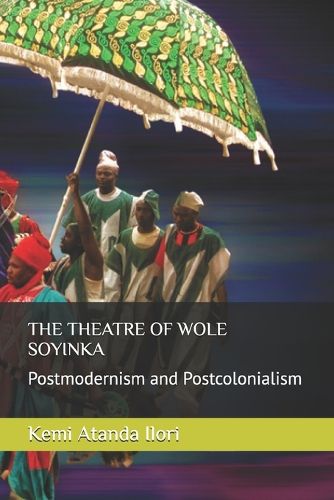
This book is the third of a five-part mini-series on the theatre of Wole Soyinka. Although Soyinka is also a renowned poet, novelist, essayist and political activist, nevertheless, when he was awarded the Nobel Prize for Literature in 1986, it was for "fashioning the drama of existence" across his whole piece (Nobel Prize Panel, 1986). The series covers critical analyses of eight major plays of Soyinka based on theoretical insights from a wide range of cultural and literary theorists: Barthes, Bhabha, Eco, Foucault, Gennep, Hutcheon, Jeyifo, Jung, Kristeva, Levinas, Olaniyan, Turner and Soyinka himself. Opening new frontiers on Soyinka, the series delves into Soyinka's theatre taking the curtains off key concepts such as liminality, modernism, postmodernism, metamodernism, abjection, "othering", and intertexuality as they apply to Soyinka's theatre. The main mould for these analyses is the original and piercing discourse on Soyinka's "fourth stage" as a form of universal dramatic theory in which the poetics of myth and ritual and the postcolonial distinctions of Soyinka's theatre find congruence.
The Theatre of Wole Soyinka: Postmodernism and Postcolonialism evaluates the traditions of postmodernism and postcolonialism in Soyinka's dramatic works. The connections of postmodernism and postcolonialism are rarely investigated in the critical works on Soyinka. In this mini book, however, they are treated as the important confluence of the sociology and politics of Soyinka's principal characters. Moreover, Soyinka's art and vision are examined in terms of the historicity and postcolonial discourse that they entail.
$9.00 standard shipping within Australia
FREE standard shipping within Australia for orders over $100.00
Express & International shipping calculated at checkout
Stock availability can be subject to change without notice. We recommend calling the shop or contacting our online team to check availability of low stock items. Please see our Shopping Online page for more details.
This book is the third of a five-part mini-series on the theatre of Wole Soyinka. Although Soyinka is also a renowned poet, novelist, essayist and political activist, nevertheless, when he was awarded the Nobel Prize for Literature in 1986, it was for "fashioning the drama of existence" across his whole piece (Nobel Prize Panel, 1986). The series covers critical analyses of eight major plays of Soyinka based on theoretical insights from a wide range of cultural and literary theorists: Barthes, Bhabha, Eco, Foucault, Gennep, Hutcheon, Jeyifo, Jung, Kristeva, Levinas, Olaniyan, Turner and Soyinka himself. Opening new frontiers on Soyinka, the series delves into Soyinka's theatre taking the curtains off key concepts such as liminality, modernism, postmodernism, metamodernism, abjection, "othering", and intertexuality as they apply to Soyinka's theatre. The main mould for these analyses is the original and piercing discourse on Soyinka's "fourth stage" as a form of universal dramatic theory in which the poetics of myth and ritual and the postcolonial distinctions of Soyinka's theatre find congruence.
The Theatre of Wole Soyinka: Postmodernism and Postcolonialism evaluates the traditions of postmodernism and postcolonialism in Soyinka's dramatic works. The connections of postmodernism and postcolonialism are rarely investigated in the critical works on Soyinka. In this mini book, however, they are treated as the important confluence of the sociology and politics of Soyinka's principal characters. Moreover, Soyinka's art and vision are examined in terms of the historicity and postcolonial discourse that they entail.
Search our extensive online catalogue.
