Readings Newsletter
Become a Readings Member to make your shopping experience even easier.
Sign in or sign up for free!
You’re not far away from qualifying for FREE standard shipping within Australia
You’ve qualified for FREE standard shipping within Australia
The cart is loading…


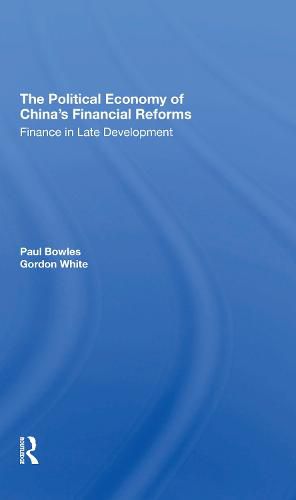
THIS PATHBREAKING Work analyzes the evolution of China’s financial reforms since 1979. China’s reformers have stressed the construction of a more diverse, flexible, and competitive financial system as a crucial element of China’s economic reform program. The authors assess the theory and practice of financial reform in light of China’s specific characteristics as a large, developing country that still claims to be pursuing the goal of establishing a new form of socialist market economy. The authors utilize two approaches. First, they place the overall design and trajectory of. financial reform since 1979 within a broad comparative framework of alternative strategies of financial reform and financial systems. Second, they use a political economy perspective to explore the complex interactions among the political and economic actors- individual, group, or institutional-that affect reform outcomes. Integrating these two approaches, the authors conclude by assessing future directions for feasible and desirable financial reform in China.
$9.00 standard shipping within Australia
FREE standard shipping within Australia for orders over $100.00
Express & International shipping calculated at checkout
Stock availability can be subject to change without notice. We recommend calling the shop or contacting our online team to check availability of low stock items. Please see our Shopping Online page for more details.
THIS PATHBREAKING Work analyzes the evolution of China’s financial reforms since 1979. China’s reformers have stressed the construction of a more diverse, flexible, and competitive financial system as a crucial element of China’s economic reform program. The authors assess the theory and practice of financial reform in light of China’s specific characteristics as a large, developing country that still claims to be pursuing the goal of establishing a new form of socialist market economy. The authors utilize two approaches. First, they place the overall design and trajectory of. financial reform since 1979 within a broad comparative framework of alternative strategies of financial reform and financial systems. Second, they use a political economy perspective to explore the complex interactions among the political and economic actors- individual, group, or institutional-that affect reform outcomes. Integrating these two approaches, the authors conclude by assessing future directions for feasible and desirable financial reform in China.
Search our extensive online catalogue.
