Readings Newsletter
Become a Readings Member to make your shopping experience even easier.
Sign in or sign up for free!
You’re not far away from qualifying for FREE standard shipping within Australia
You’ve qualified for FREE standard shipping within Australia
The cart is loading…


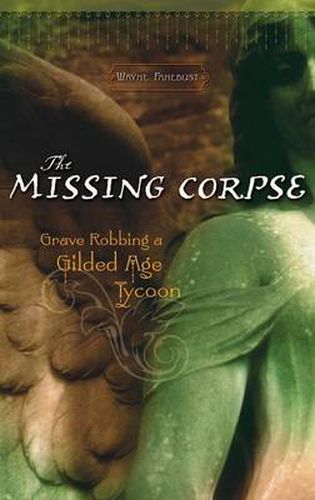
The grave robbing of one of the country’s wealthiest Gilded Age merchants-Alexander T. Stewart, the Merchant Prince of Manhattan-set off a firestorm in the media, and one of the most celebrated police investigations in the city’s history. Immortalized in Mark Twain’s humorous story, The Stolen White Elephant, this crime captured the imagination of the American public. Against the backdrop of high society Manhattan, and Gilded Age decadence, this book chronicles the case of the missing body of the Merchant of Manhattan and reveals some of the more unseemly and unusual sides of nineteenth century urban life.
Along with the likes of Carnegie, Rockefeller, Vanderbilt, and Morgan, Alexander T. Stewart made his fortune during the years when America industrialized. By the time of his death in 1876, Stewart, known as the Merchant Prince of Manhattan, had amassed a fortune estimated between $40 and $50 million. Snubbed by other Manhattan elites, he died lonely and miserable, his body interred in a vault at St. Mark’s churchyard in Manhattan, awaiting relocation to the Long Island suburb he had dreamed of planning. But on the morning of November 7, 1878, the vault was discovered to have been emptied, the body gone. Few clues remained at the scene, and the public and press began speculating about the identity of the culprits. Grave robbing was not uncommon in the 19th century, as medical schools needed cadavers for their experiments but were often barred from using them; grave robbers seized the opportunity. Others speculated that a ransom was the motive, or that the stunt was meant as a political statement,a backlash against the wealthy. The newspapers fought fiercely for exclusive coverage and stories that could outdo their rivals. Suspects were arrested, but released when it was revealed that publicity had motivated their false confessions. And local clergy took the opportunity to equate the grave robbery with other sinful behavior, such as drinking and prostitution. Spiritualists and clairvoyants offered their services, but were quickly dismissed by the police and the press. The police continued to bungle the investigation, and ultimately the body was never recovered.
$9.00 standard shipping within Australia
FREE standard shipping within Australia for orders over $100.00
Express & International shipping calculated at checkout
Stock availability can be subject to change without notice. We recommend calling the shop or contacting our online team to check availability of low stock items. Please see our Shopping Online page for more details.
The grave robbing of one of the country’s wealthiest Gilded Age merchants-Alexander T. Stewart, the Merchant Prince of Manhattan-set off a firestorm in the media, and one of the most celebrated police investigations in the city’s history. Immortalized in Mark Twain’s humorous story, The Stolen White Elephant, this crime captured the imagination of the American public. Against the backdrop of high society Manhattan, and Gilded Age decadence, this book chronicles the case of the missing body of the Merchant of Manhattan and reveals some of the more unseemly and unusual sides of nineteenth century urban life.
Along with the likes of Carnegie, Rockefeller, Vanderbilt, and Morgan, Alexander T. Stewart made his fortune during the years when America industrialized. By the time of his death in 1876, Stewart, known as the Merchant Prince of Manhattan, had amassed a fortune estimated between $40 and $50 million. Snubbed by other Manhattan elites, he died lonely and miserable, his body interred in a vault at St. Mark’s churchyard in Manhattan, awaiting relocation to the Long Island suburb he had dreamed of planning. But on the morning of November 7, 1878, the vault was discovered to have been emptied, the body gone. Few clues remained at the scene, and the public and press began speculating about the identity of the culprits. Grave robbing was not uncommon in the 19th century, as medical schools needed cadavers for their experiments but were often barred from using them; grave robbers seized the opportunity. Others speculated that a ransom was the motive, or that the stunt was meant as a political statement,a backlash against the wealthy. The newspapers fought fiercely for exclusive coverage and stories that could outdo their rivals. Suspects were arrested, but released when it was revealed that publicity had motivated their false confessions. And local clergy took the opportunity to equate the grave robbery with other sinful behavior, such as drinking and prostitution. Spiritualists and clairvoyants offered their services, but were quickly dismissed by the police and the press. The police continued to bungle the investigation, and ultimately the body was never recovered.
Search our extensive online catalogue.
