Readings Newsletter
Become a Readings Member to make your shopping experience even easier.
Sign in or sign up for free!
You’re not far away from qualifying for FREE standard shipping within Australia
You’ve qualified for FREE standard shipping within Australia
The cart is loading…


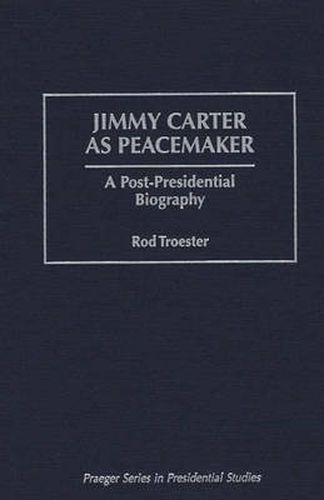
Jimmy Carter left the White House in January of 1981 in the wake of the Iranian hostage crisis, a faltering economy, and a stunning defeat at the polls. At the relatively young age of 56, Carter joined the elite fraternity of former presidents. When contemporary U.S. presidents have left office, they have generally written their memoirs, established their presidential libraries, served on corporate boards, or assumed elder statesman roles. Jimmy Carter has taken a different path, and this study demonstrates how the Carter post-presidency has redefined the role of former president and refurbished Carter’s image. The author argues that Carter has shown that through active involvement in world affairs and humanitarian causes, and through the careful investment of post-presidential credibility and political capital, a former president can make significant contributions to a more peaceful world.
$9.00 standard shipping within Australia
FREE standard shipping within Australia for orders over $100.00
Express & International shipping calculated at checkout
Stock availability can be subject to change without notice. We recommend calling the shop or contacting our online team to check availability of low stock items. Please see our Shopping Online page for more details.
Jimmy Carter left the White House in January of 1981 in the wake of the Iranian hostage crisis, a faltering economy, and a stunning defeat at the polls. At the relatively young age of 56, Carter joined the elite fraternity of former presidents. When contemporary U.S. presidents have left office, they have generally written their memoirs, established their presidential libraries, served on corporate boards, or assumed elder statesman roles. Jimmy Carter has taken a different path, and this study demonstrates how the Carter post-presidency has redefined the role of former president and refurbished Carter’s image. The author argues that Carter has shown that through active involvement in world affairs and humanitarian causes, and through the careful investment of post-presidential credibility and political capital, a former president can make significant contributions to a more peaceful world.
Search our extensive online catalogue.
