Readings Newsletter
Become a Readings Member to make your shopping experience even easier.
Sign in or sign up for free!
You’re not far away from qualifying for FREE standard shipping within Australia
You’ve qualified for FREE standard shipping within Australia
The cart is loading…


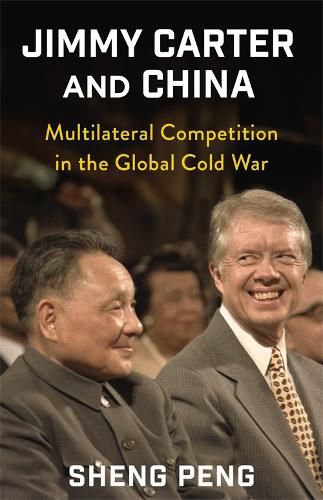
In the late 1970s, with relations between the Soviet Union and the People's Republic of China strained, the Carter administration saw an opening. The United States and its allies embarked on military and dual-use technology transfers to China as a counterweight to the USSR, transforming rapprochement into full-blown cooperation. Carter's decision to pivot away from the United States's traditional ally, the Republic of China on Taiwan, and embrace the People's Republic redefined the Cold War from a struggle against communism to one against the Soviet Union. It not only complicated a variety of American objectives-from the security of Taiwan to US-Soviet detente-but also sowed the seeds of future tensions between China and the West.
This book is an international history of the Carter administration's intricate relations with the two competing Chinese regimes, emphasizing the geopolitical significance and lasting implications of this crucial moment. Drawing extensively from previously untapped archives in several countries and languages, Sheng Peng uncovers the internal governmental debates across world capitals that affected Carter's China policy. He examines how the Carter administration attempted to balance relations with both Chinese governments as well as how Chinese and Taiwanese leaders navigated global rivalries. Revealing how the Carter years profoundly reshaped the course of the Cold War, this book sheds new light on the strategic, technological, and ideological competition that continues today.
$9.00 standard shipping within Australia
FREE standard shipping within Australia for orders over $100.00
Express & International shipping calculated at checkout
Stock availability can be subject to change without notice. We recommend calling the shop or contacting our online team to check availability of low stock items. Please see our Shopping Online page for more details.
In the late 1970s, with relations between the Soviet Union and the People's Republic of China strained, the Carter administration saw an opening. The United States and its allies embarked on military and dual-use technology transfers to China as a counterweight to the USSR, transforming rapprochement into full-blown cooperation. Carter's decision to pivot away from the United States's traditional ally, the Republic of China on Taiwan, and embrace the People's Republic redefined the Cold War from a struggle against communism to one against the Soviet Union. It not only complicated a variety of American objectives-from the security of Taiwan to US-Soviet detente-but also sowed the seeds of future tensions between China and the West.
This book is an international history of the Carter administration's intricate relations with the two competing Chinese regimes, emphasizing the geopolitical significance and lasting implications of this crucial moment. Drawing extensively from previously untapped archives in several countries and languages, Sheng Peng uncovers the internal governmental debates across world capitals that affected Carter's China policy. He examines how the Carter administration attempted to balance relations with both Chinese governments as well as how Chinese and Taiwanese leaders navigated global rivalries. Revealing how the Carter years profoundly reshaped the course of the Cold War, this book sheds new light on the strategic, technological, and ideological competition that continues today.
Search our extensive online catalogue.
