Readings Newsletter
Become a Readings Member to make your shopping experience even easier.
Sign in or sign up for free!
You’re not far away from qualifying for FREE standard shipping within Australia
You’ve qualified for FREE standard shipping within Australia
The cart is loading…


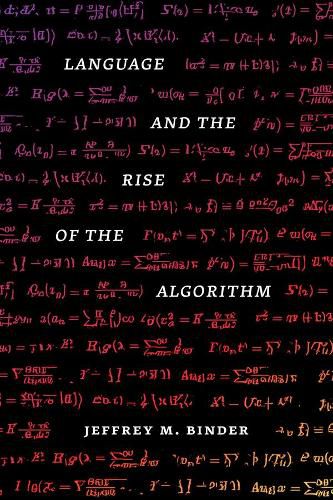
A wide-ranging history of the intellectual developments that produced the modern idea of the algorithm.
Bringing together the histories of mathematics, computer science, and linguistic thought, Language and the Rise of the Algorithm reveals how recent developments in artificial intelligence are reopening an issue that troubled mathematicians long before the computer age. How do you draw the line between computational rules and the complexities of making systems comprehensible to people? Here Jeffrey M. Binder offers a compelling tour of four visions of universal computation that addressed this issue in very different ways: G. W. Leibniz’s calculus ratiocinator; a universal algebra scheme Nicolas de Condorcet designed during the French Revolution; George Boole’s nineteenth-century logic system; and the early programming language ALGOL, whose name is short for algorithmic language.
These episodes show that symbolic computation has repeatedly become entangled in debates about the nature of communication. To what extent can meaning be controlled by individuals, like the values of a and b in algebra, and to what extent is meaning inevitably social? By attending to this long-neglected question, we come to see that the modern idea of the algorithm is implicated in a long history of attempts to maintain a disciplinary boundary separating technical knowledge from the languages people speak day to day. Machine learning, in its increasing dependence on words, now places this boundary in jeopardy, making its stakes all the more urgent to understand.
The idea of the algorithm is a levee holding back the social complexity of language, and it is about to break. This book is about the flood that inspired its construction.
$9.00 standard shipping within Australia
FREE standard shipping within Australia for orders over $100.00
Express & International shipping calculated at checkout
Stock availability can be subject to change without notice. We recommend calling the shop or contacting our online team to check availability of low stock items. Please see our Shopping Online page for more details.
A wide-ranging history of the intellectual developments that produced the modern idea of the algorithm.
Bringing together the histories of mathematics, computer science, and linguistic thought, Language and the Rise of the Algorithm reveals how recent developments in artificial intelligence are reopening an issue that troubled mathematicians long before the computer age. How do you draw the line between computational rules and the complexities of making systems comprehensible to people? Here Jeffrey M. Binder offers a compelling tour of four visions of universal computation that addressed this issue in very different ways: G. W. Leibniz’s calculus ratiocinator; a universal algebra scheme Nicolas de Condorcet designed during the French Revolution; George Boole’s nineteenth-century logic system; and the early programming language ALGOL, whose name is short for algorithmic language.
These episodes show that symbolic computation has repeatedly become entangled in debates about the nature of communication. To what extent can meaning be controlled by individuals, like the values of a and b in algebra, and to what extent is meaning inevitably social? By attending to this long-neglected question, we come to see that the modern idea of the algorithm is implicated in a long history of attempts to maintain a disciplinary boundary separating technical knowledge from the languages people speak day to day. Machine learning, in its increasing dependence on words, now places this boundary in jeopardy, making its stakes all the more urgent to understand.
The idea of the algorithm is a levee holding back the social complexity of language, and it is about to break. This book is about the flood that inspired its construction.
Search our extensive online catalogue.
