Readings Newsletter
Become a Readings Member to make your shopping experience even easier.
Sign in or sign up for free!
You’re not far away from qualifying for FREE standard shipping within Australia
You’ve qualified for FREE standard shipping within Australia
The cart is loading…


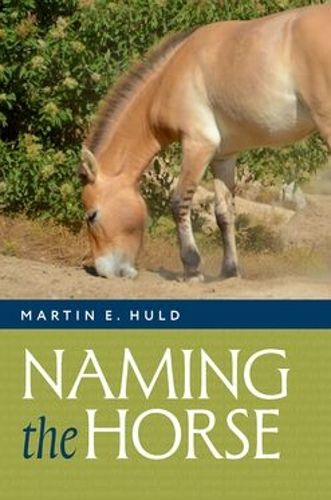
In Naming the Horse, author Martin E. Huld explains the basis of linguistic palaeontology, the reconstruction and analysis of past cultures through the words such cultures used to describe and define the elements of their culture and their practices. He refutes a number of misconceptions and distortions about the practice and results of linguistic palaeontology by explaining how historical linguistics is actually practiced and examining the entire range of terms relating to horses along with those of other domesticated animals, the means of transport, and rituals. He surveys previous accounts of the origins of the Proto-Indo-European word for 'horse', *E, and ultimately offers an explanation of PIE *Eas 'the unruly beast', a conclusion that provides strong evidence along with ritual prohibitions that the horse was a member of the domesticated animals known to those people and that the Proto-Indo-Europeans were among the earliest people to develop wheeled transport and to ride horses. The speed and agility of the horse enabled them to increase the size of their herds and set off an economic revolution. However, the notion that the horse was primarily used as a weapon of war finds little support in the linguistic evidence. There were certainly no chariots, and the idea that Proto-Indo-European society was primarily focused on warfare and aggression is shown to be untenable.
$9.00 standard shipping within Australia
FREE standard shipping within Australia for orders over $100.00
Express & International shipping calculated at checkout
Stock availability can be subject to change without notice. We recommend calling the shop or contacting our online team to check availability of low stock items. Please see our Shopping Online page for more details.
In Naming the Horse, author Martin E. Huld explains the basis of linguistic palaeontology, the reconstruction and analysis of past cultures through the words such cultures used to describe and define the elements of their culture and their practices. He refutes a number of misconceptions and distortions about the practice and results of linguistic palaeontology by explaining how historical linguistics is actually practiced and examining the entire range of terms relating to horses along with those of other domesticated animals, the means of transport, and rituals. He surveys previous accounts of the origins of the Proto-Indo-European word for 'horse', *E, and ultimately offers an explanation of PIE *Eas 'the unruly beast', a conclusion that provides strong evidence along with ritual prohibitions that the horse was a member of the domesticated animals known to those people and that the Proto-Indo-Europeans were among the earliest people to develop wheeled transport and to ride horses. The speed and agility of the horse enabled them to increase the size of their herds and set off an economic revolution. However, the notion that the horse was primarily used as a weapon of war finds little support in the linguistic evidence. There were certainly no chariots, and the idea that Proto-Indo-European society was primarily focused on warfare and aggression is shown to be untenable.
Search our extensive online catalogue.
